
Textile Industry Solutions
Textile Mold &
Antibacterial Protection
SolutionsPractical anti-mold and antibacterial protection solutions for
apparel, home textiles, nonwovens, footwear and other textile
products, selected according to material, finishing process and
application requirements.TECHNICAL CONSULTATION
Industry Overview
Protecting Textiles from Mold, Bacteria and
Moisture-Related Risks
Textile materials can be exposed to moisture, microbial growth, odors, and contamination during
finishing, storage, transportation, and use.
For textile manufacturers, protection requirements vary according to fiber composition, fabric construction, finishing
method and final application. A suitable antimicrobial system should balance antimicrobial performance with fabric
appearance, hand feel, processing compatibility, and intended service conditions.
Industry Challenges
Common Textile Protection Challenges
Mold During Storage & Transportation
Textile products are particularly susceptible to moisture and mold growth during storage and transportation, especially during long-distance shipping when temperature fluctuations lead to condensation inside sealed containers.
Bacterial Growth & Odor
Moisture, sweat, skin oils, and organic residues can create favorable conditions for bacterial growth and unpleasant odors in apparel and synthetic fabrics.
Compatibility, Compliance & Performance
Achieving effective antimicrobial performance without compromising the fabric's original hand feel, appearance, or wash durability can be a significant challenge for textile manufacturers. At the same time, meeting increasingly stringent global chemical and textile safety requirements, including applicable REACH restrictions and relevant OEKO-TEX criteria, adds a critical layer of complexity to export compliance.
Case Studies & Risk Analysis
Real Risk Scenarios Across the Textile
Supply Chain
Different stages, materials, and use environments face distinct microbial threats. Our solutions
are tailored to match specific mold, bacterial, and moisture control needs.
🏗️ 01. Ocean Freight & Container Transport
"Container Rain": The Hidden Threat
Long-distance sea freight exposes textiles to repeated fluctuations in temperature and humidity. When warm, moist air cools inside a sealed container, condensation can form on the container ceiling, walls, or the surface of the cargo itself.
🚨 Microbial Threat: Prolonged exposure to high humidity, condensation, and inadequate drying can create favorable conditions for common molds such as Aspergillus and Penicillium, leading to staining, discoloration, and unpleasant odors.
🏭 02. Textile Production & Warehouse Storage
Residual Moisture and Localized Humidity
If textiles are not thoroughly dried after production, or if warehouse ventilation is insufficient, residual moisture can promote microbial growth, especially under prolonged high-humidity conditions.
🚨 Microbial Threat: Localized damp areas can form in piled fabric, increasing the risk of mold spread within the batch and resulting in substantial material waste.
🏃 03. Sportswear & Synthetic Fabrics
Sweat, Skin Oils, and Odor-Causing Bacteria
While many synthetic sportswear fabrics are engineered for efficient moisture wicking, sweat, skin oils, and organic residues can still accumulate on fabrics during repeated wear. Under warm and humid conditions, these residues can support the growth of odor-associated bacteria.
🚨 Microbial Threat: The primary concern is persistent, unpleasant odors associated with bacterial growth, which can become deeply embedded in the fabric and affect wearer comfort.
🛏️ 04. Home Textiles & Long-Term Storage
Trapped Moisture in Heavy or Stacked Fabrics
Bedding, blankets, towels, and other bulky home textiles can retain moisture depending on their material composition. When stacked tightly or folded in warehouses, airflow can become restricted, allowing localized moisture to remain trapped within folds or inner layers.
🚨 Microbial Threat: Once mold growth becomes established in these confined areas, the resulting stains, odors, and discoloration are extremely difficult to remove, potentially affecting product quality and customer acceptance.
🛡️ Our Comprehensive Supply Chain Protection Strategy
1. Textile Treatment
Apply an appropriate anti-mold or antibacterial treatment during the relevant finishing or treatment stage, depending on the fabric type and production process.
2. Thorough Drying
Ensure textiles are sufficiently dried before warehousing to reduce residual moisture and minimize the risk of early fungal growth.
3. Moisture Control
Implement appropriate moisture-control measures, such as desiccants or moisture-management packaging, based on the specific goods and transit conditions.
4. Container Management
Verify container cleanliness, dryness, and ventilation. Ensure cargo is packed appropriately to avoid unnecessary moisture entrapment and allow adequate air circulation where appropriate.
Our Solutions
Protection Systems Matched to Your
Textile Applications
ADMIRE helps identify suitable protective products based on the textile substrate, processing
conditions, and target performance requirements.
01 — Anti-Mold Protection
Reduce Mold Risk
Anti-mold treatments can be applied to textile materials exposed to moisture during production, storage, or transportation.
02 — Antibacterial Protection
Add Antibacterial Function
Antibacterial treatments can be used for fabrics and finished textile products requiring hygiene, odor control, or antibacterial performance.
03 — Combined Protection
Anti-Mold + Antibacterial
For applications requiring multiple protection functions, compatible treatment systems can be evaluated through laboratory testing or production trials.
04 — Material Compatibility
Adapt to Your Production Process
Product selection should consider fiber type, treatment method, dosage, curing conditions, and the required end-use performance.
Recommended Products
Textile Protection Products
Select the appropriate solution based on the material type, processing method, and
required protection performance.
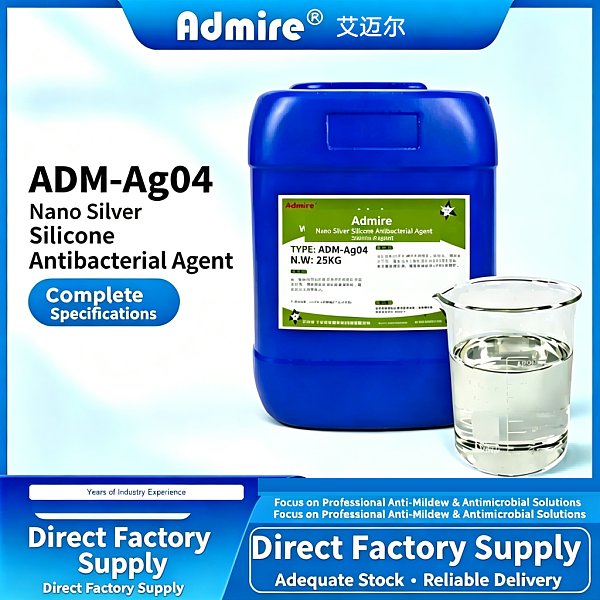
 ADM-Ag04 Nano Silver Silicone Antibacterial AgentADM-Ag04 is a nano silver antibacterial agent specially designed for silicone products. It contains nano silver particles of approximately 10 nm and provides long-lasting antimicrobial protection for suitable silicone formulations, with good compatibility in anionic and nonionic surfactant systems.
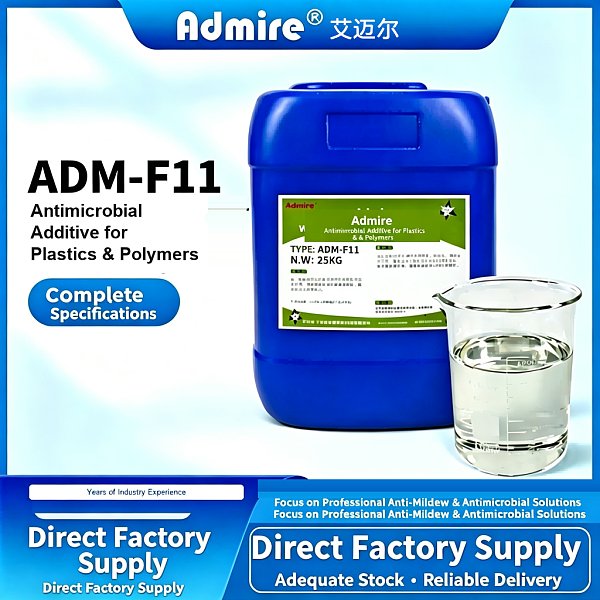
 ADM-F11 Antimicrobial Additive for Plastics & PolymersADM-F11 Antimicrobial additive for plastics and polymers based on N-(trichloromethylthio)phthalimide. Designed to control microbial and fungal growth in PVC, TPE, TPU, silicone sealants, and polymer-coated textiles.
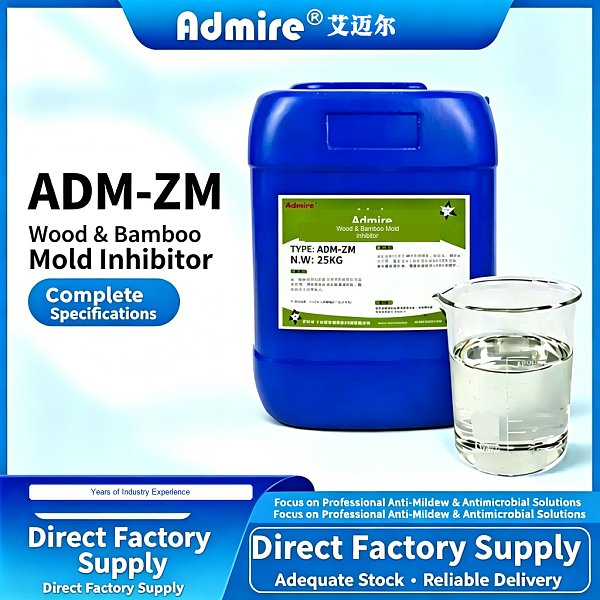
 ADM-ZM Wood & Bamboo Mold InhibitorADM-ZM wood mold inhibitor solutions are designed to help protect timber, wood products, and bamboo materials from mold and mildew growth caused by moisture, humidity, and long-term storage. Suitable for wood processing, furniture, flooring, packaging, bamboo products, and other wood-based applications, our solutions can be selected according to the material, processing method, and required protection period.
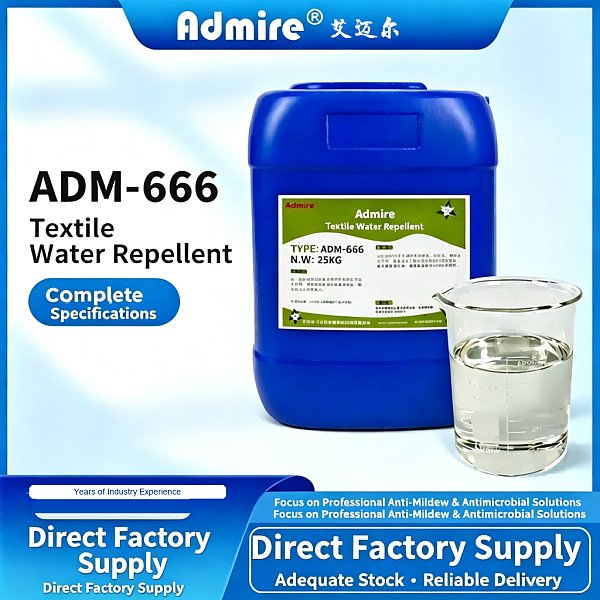
 ADM-666 Textile Water Repellent AgentADM-666 is a water-based fluoropolymer water-repellent agent designed for textile fabrics. It is suitable for polyester, nylon, polyester/cotton blends, and especially cotton fabrics. The treatment creates a hydrophobic surface to provide durable water repellency while helping maintain fabric breathability and original hand feel.
Application Process
From Material Selection to Performance Testing
Confirm the fiber composition, fabric construction, and intended application.
Select suitable protective treatments based on the material and target performance.
Evaluate the appropriate dosage and application conditions through laboratory or small-scale trials.
Optimize the application method, drying, and curing conditions to achieve consistent treatment performance.
Evaluate antimicrobial performance while verifying fabric appearance, hand feel, durability, and other relevant properties.
Applications
Textile Applications We Support
Our textile protection solutions can be adapted to a wide range of textile applications.
Apparel
Garments and clothing
Sportswear
Performance and activewear
Home Textiles
Bedding, towels, curtains, and other household textiles
Nonwovens
Industrial and consumer applications
Footwear
Textile components and fabric-based materials
Functional Textiles
Specialty and performance fabrics
Technical Considerations
What to Confirm Before Processing
Material & Process
- Fiber composition and fabric construction
- Existing treatment and application methods
- Drying and curing conditions
- Required hand feel and appearance
Performance Requirements
- Targeted anti-mold or antibacterial performance
- Washing and durability requirements
- End-use environment and storage conditions
- Applicable customer specifications and regulatory requirements
FAQ
Frequently Asked Questions
Yes. For applications requiring both mold and bacterial protection, compatible treatment systems can be evaluated based on the fabric type, processing method, and target performance.
Treatment suitability depends on the fiber composition, fabric construction, existing finishes, and application process. We recommend evaluating the specific material before selecting a product.
Application methods vary according to the fabric and production process. Depending on the application, treatments may be incorporated during finishing or applied through suitable coating, padding, spraying, or other processes.
Yes. We can evaluate your material and application requirements and arrange suitable samples for laboratory or production trials where applicable.
Not Sure Which Textile Protection Product Fits Your
Application?
Share your material, processing conditions, and target performance requirements with our technical
team. We can help identify suitable products for evaluation and testing.
Thank you very much for writing to us. Please leave your message and contact information, we will reply to you within 24 hours.