-
Leather Industry Solutions
Anti-Mold &
Antibacterial Protection
for LeatherAnti-mold and antibacterial protection for leather materials and
finished goods, selected according to leather type, processing
stage, storage conditions, and application requirements.TECHNICAL CONSULTATION
Industry Overview
Why Leather Needs Specialized Protection
Unlike inorganic materials, leather is a natural organic substrate rich in proteins, fats, and nutrients
—an ideal environment for microbial growth.
Leather undergoes multiple wet-processing, finishing, storage, and transportation stages that may increase the risk of mold and microbial contamination. Depending on the leather type and processing conditions, contamination can contribute to surface staining, odor, and product quality concerns. An effective protection strategy should consider both the material characteristics and the risks associated with each processing stage.
Risk Scenarios
Critical Microbial Risks Across the Leather
Lifecycle
Leather production involves multiple wet and dry stages. Each stage presents distinct microbial
threats that require targeted protection.
🟦 01. Wet-Blue & Wet-White Storage
Mold Growth During Storage and Transport
Chrome-tanned and aldehyde-tanned leather in wet state are highly susceptible to mold. Humid storage conditions promote rapid fungal growth on the leather surface, causing permanent stains, fiber damage, and significant economic loss.
Key Risk: Irreversible surface staining and structural degradation; entire batches may be downgraded or rejected.
🛢️ 02. Fatliquoring & Dyeing
Fatliquor Rancidity and Oil Bloom
Natural oils and synthetic esters used in fatliquoring can undergo hydrolysis and oxidation under microbial action. This produces free fatty acids that migrate to the leather surface, creating "oil bloom" (white or yellow spots), unpleasant odors, and reduced leather quality.
Key Risk: Surface defects, odor complaints, and reduced product value; difficult to correct once visible.
📦 03. Finished Goods & Shipping
Mold During Storage, Transport, and Export
Finished leather goods—shoes, bags, furniture, and garments—face high humidity during ocean freight and warehouse storage, especially in tropical and subtropical regions. Improper packaging and poor ventilation accelerate mold growth on finished products.
Key Risk: Visible mold on finished products, customer returns, brand damage, and costly reconditioning.
04 — Chemical Compatibility
Anti-Mold Agent and Cr(VI) Formation Risk
Not all anti-mold agents are suitable for chrome-tanned leather. Some oxidizing or strongly acidic biocides can promote the conversion of trivalent chromium to hexavalent chromium (Cr(VI)), a strong sensitizer strictly limited in EU and global markets.
Key Risk: Cr(VI) content exceeding regulatory limits (e.g., REACH 3 mg/kg), causing export rejection and legal liability.
Key Consideration: Leather as an Organic Material
Leather is an organic material that can retain nutrients and moisture within its fibrous structure. Compared with many synthetic materials, this can create different microbial protection requirements. For applications with elevated mold risk, protection may need to be considered at more than one processing, storage, or finished-product stage.
Application-Specific Risks
Tailored Protection for Different Leather Products
FOOTWEAR
Shoes, Insoles, Linings
High moisture and sweat create an ideal environment for bacteria and fungi. May require anti-mold or antibacterial protection depending on the material construction, use conditions, and performance requirements.
BAGS & ACCESSORIES
Handbags, Wallets, Belts
Long storage and shipping periods increase mold risk. Protection must not alter leather surface characteristics or cause color migration.
FURNITURE & AUTOMOTIVE
Sofas, Car Seats, Steering Wheels
Exposure to humidity, repeated contact, and enclosed environments may require durable protection with appropriate compatibility and fastness properties.
GARMENT LEATHER
Jackets, Skirts, Gloves
Direct-contact applications may require careful product selection to balance protection performance with softness, appearance, and applicable fastness requirements.
Protection Strategy
Stage-by-Stage Microbial Control
Leather production involves multiple wet and dry stages—each requires a specific protection
approach.
Help manage mold risk during storage and handling of wet leather, according to the processing stage and material condition.
Evaluate suitable protection options for tanning and retanning processes while maintaining compatibility with the leather system.
Evaluate compatibility with fatliquors, dyes, and other formulation components while supporting the required protection performance.
Select suitable protection for finishing systems while evaluating adhesion, appearance, gloss, and hand feel.
Evaluate finished-product surface protection and packaging measures for storage and transportation conditions.
Recommended Products
Silicone Protection Products
Select the appropriate solution based on silicone type, processing method, and required protection
performance.
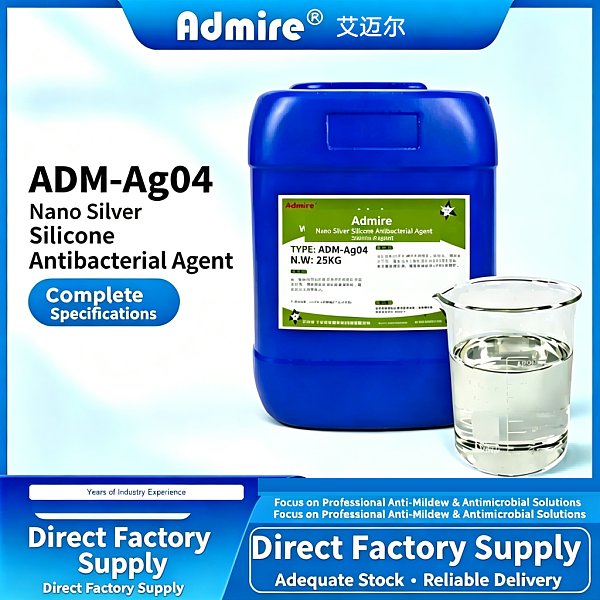
 ADM-Ag04 Nano Silver Silicone Antibacterial AgentADM-Ag04 is a nano silver antibacterial agent specially designed for silicone products. It contains nano silver particles of approximately 10 nm and provides long-lasting antimicrobial protection for suitable silicone formulations, with good compatibility in anionic and nonionic surfactant systems.
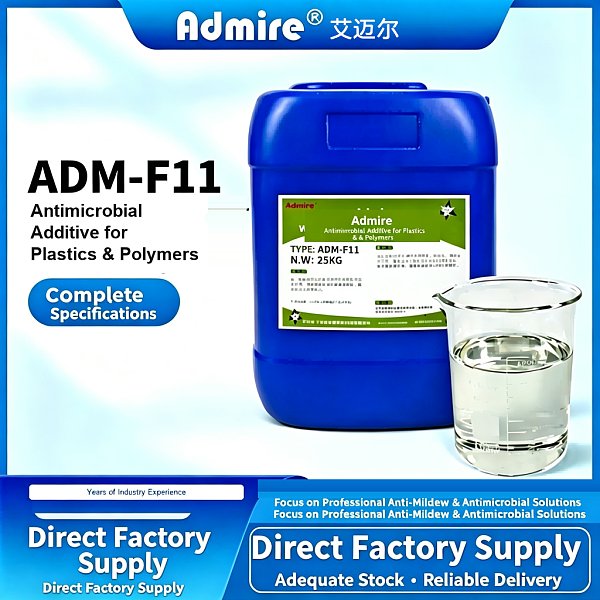
 ADM-F11 Antimicrobial Additive for Plastics & PolymersADM-F11 Antimicrobial additive for plastics and polymers based on N-(trichloromethylthio)phthalimide. Designed to control microbial and fungal growth in PVC, TPE, TPU, silicone sealants, and polymer-coated textiles.
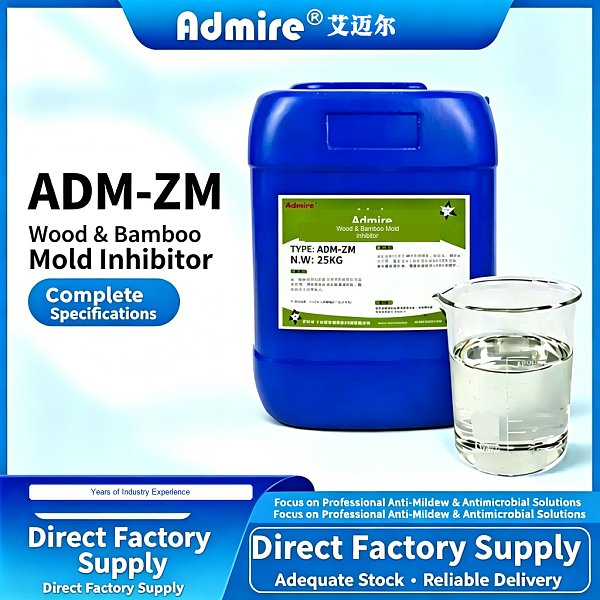
 ADM-ZM Wood & Bamboo Mold InhibitorADM-ZM wood mold inhibitor solutions are designed to help protect timber, wood products, and bamboo materials from mold and mildew growth caused by moisture, humidity, and long-term storage. Suitable for wood processing, furniture, flooring, packaging, bamboo products, and other wood-based applications, our solutions can be selected according to the material, processing method, and required protection period.
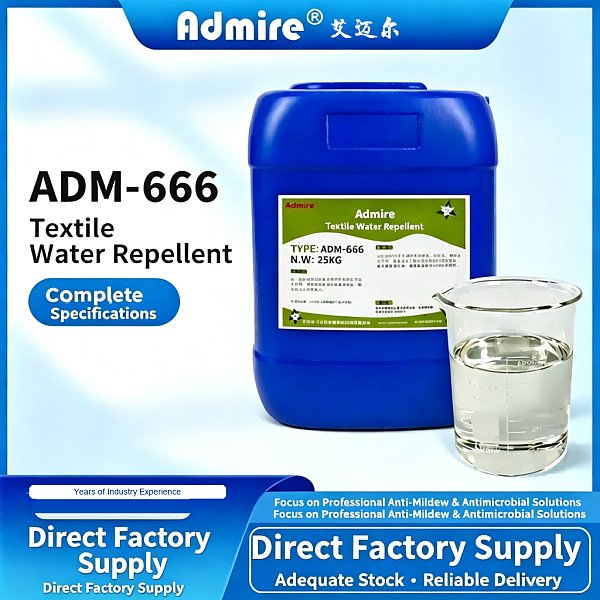
 ADM-666 Textile Water Repellent AgentADM-666 is a water-based fluoropolymer water-repellent agent designed for textile fabrics. It is suitable for polyester, nylon, polyester/cotton blends, and especially cotton fabrics. The treatment creates a hydrophobic surface to provide durable water repellency while helping maintain fabric breathability and original hand feel.
Compliance Support
How Our Products Support Your Compliance
Requirements
Product selection can take downstream regulatory, customer, and application requirements into
account. Final suitability should be confirmed for the specific leather system and target market.
Product Formulation
- Product selection should consider potential effects on Cr(VI) formation; final Cr(VI) content should be verified for the specific leather system using an appropriate test method
- Compatibility with fatliquors, dyes, and finish systems should be evaluated for the specific formulation
- Appearance, softness, fullness, and color should be evaluated through application testing
- Low-VOC or migration-related requirements should be confirmed for the specific product and application
Supporting Your Testing
- Relevant fastness and physical-performance requirements should be confirmed according to the final application
- Applicable customer, regional, and regulatory requirements should be confirmed according to the target market and application
- Technical team can provide guidance on suitable test methods and standards
- Sample products available for compatibility and performance evaluation
FAQ
Frequently Asked Questions
Leather is an organic material with a fibrous structure that can retain nutrients and moisture, which may increase mold risk under suitable environmental conditions. Synthetic materials can also develop surface mold when moisture and contamination are present, but the protection considerations may differ from those for genuine leather.
Product chemistry and processing conditions can influence Cr(VI)-related risks in chrome-tanned leather. Product compatibility should therefore be evaluated for the specific leather system, and Cr(VI) testing should be carried out using an appropriate recognized method before full-scale production.
A suitable treatment should be evaluated for its effect on leather appearance, hand feel, color, and relevant physical properties. Small-scale trials are recommended before full production.
A protection plan may combine suitable leather treatment, packaging measures, moisture control, and appropriate storage or transportation practices. The recommended approach should be selected according to the leather type, shipment conditions, and expected transit environment.
Synthetic leather may also require protection when moisture, contamination, or organic residues create favorable conditions for surface mold or microbial growth. The required approach depends on the material construction and end-use environment.
Need a Customized Leather Protection Plan?
Tell us your leather type, processing stage, and performance requirements.
Our technical team can recommend targeted anti-mold and antibacterial
solutions.
Thank you very much for writing to us. Please leave your message and contact information, we will reply to you within 24 hours.